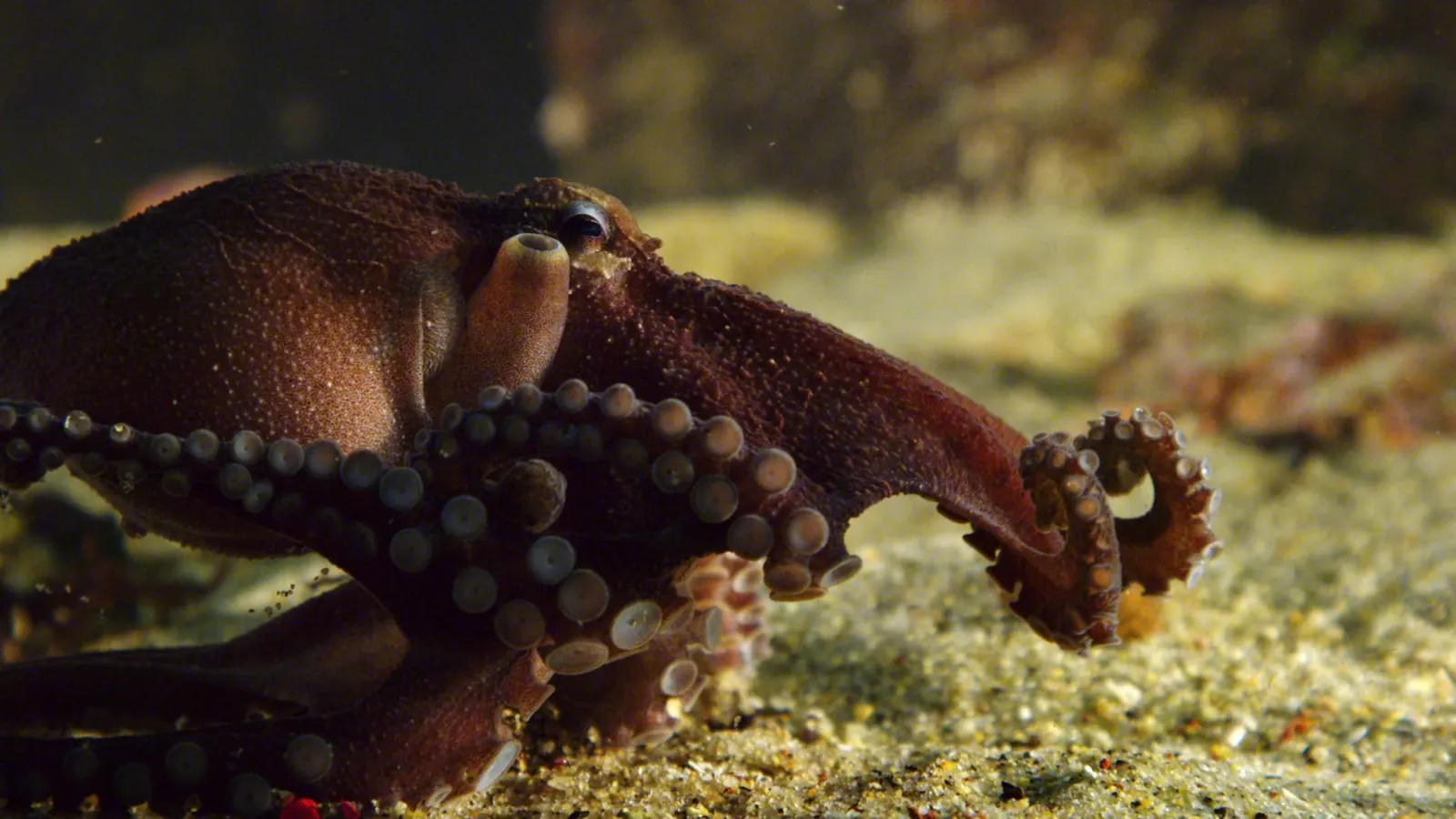
The colour comes from the oxygen carrier
Human red blood cells carry haemoglobin, a protein whose oxygen-binding chemistry depends on iron. Octopuses and other cephalopods use hemocyanin instead. This large copper-containing molecule is dissolved in the blood rather than packed into cells like our haemoglobin.
When oxygen binds to hemocyanin, the copper-based complex appears blue. The colour is not ink, camouflage or reflected seawater. It belongs to the animal's internal transport system. Deoxygenated cephalopod blood is much less vividly coloured, just as the shade of human blood changes with its oxygen state without ever becoming blue.
Why there are three hearts
The two smaller branchial hearts sit near the gills. They receive oxygen-poor blood and pump it through the gill capillaries, where gas exchange takes place. Oxygenated blood then reaches the larger systemic heart, which sends it through the rest of the body.
Counting three hearts makes a perfect headline, but their jobs are not interchangeable. The branchial pair serves the respiratory circuit; the systemic heart serves the body circuit. Together they maintain pressure through the gills and supply active muscles, skin, digestive organs and a remarkably complex nervous system.
Copper is a different solution, not an inferior one
Hemocyanin and haemoglobin solve the same broad problem through different molecular structures. The Smithsonian Ocean Portal notes that cephalopod hemocyanin can function effectively across cold and variable marine environments, although its oxygen binding responds differently to temperature and acidity from iron-based haemoglobin.
Evolution does not work toward a single ideal blood design. It modifies inherited systems within particular environments and body plans. Molluscs were using copper-based respiratory proteins long before an octopus acquired its modern intelligence, flexible arms and rapid colour change.
A soft body still needs forceful circulation
An octopus has no rigid skeleton to protect large vessels, yet its tissues still require a continuous oxygen supply. Blood must pass through fine gill vessels before travelling around a body that can squeeze through narrow gaps and change shape dramatically. Separate pumps help organise that route.
Most octopus species spend much of their time on or near the sea floor, crawling, exploring dens and making short bursts of movement. Jet propulsion is possible but energetically costly. The circulation system is part of the reason these animals can combine soft anatomy with decisive, coordinated motion.
The memorable fact hides the better lesson
It is correct to say that an octopus has blue blood and three hearts, but the numbers are only the entrance to the story. The colour identifies a respiratory molecule, and the hearts reveal how circulation is divided between gills and body.
Cephalopods demonstrate that familiar biological tasks can have unfamiliar engineering. Oxygen transport does not demand red blood, and a circulatory system does not demand one central pump. The octopus is strange from a human point of view because its lineage found workable answers of its own.
Sources and further reading
This article was written for Curiosity Desk. We do not copy other publishers or invent quotes. If a material error is found, we correct it openly.
Read the full standards →